Leave Your Message
The global dairy industry is undergoing a massive transformation, driven by evolving consumer preferences, nutritional demands, and technological advancements. At the heart of this evolution are neutral dairy beverages—typically characterized by a pH ranging from 6.5 to 7.0. These include traditional UHT milk, flavored milk, and the rapidly expanding category of plant-based dairy alternatives. Maintaining the structural integrity, mouthfeel, and visual appeal of these beverages throughout their shelf life is paramount. This is where the strategic application of a specialized Food Thickener For Neutral Dairy Beverages becomes absolutely critical.
In neutral pH environments, milk proteins (specifically casein micelles) are relatively stable compared to acidic conditions. However, when manufacturers introduce additional ingredients such as cocoa powder, calcium fortifiers, functional plant extracts, or when they subject the beverage to harsh Ultra-High Temperature (UHT) processing, this stability is heavily compromised. Without an effective food thickener, the beverage will inevitably suffer from phase separation, sedimentation of insoluble particles, fat creaming, and a watery, undesirable mouthfeel.
The industrial demand for dairy stabilizers and thickeners is experiencing unprecedented growth. Valued at several billion dollars globally, the hydrocolloid market is projected to maintain a robust Compound Annual Growth Rate (CAGR) over the next decade. This surge is not merely a reflection of increased dairy consumption, but rather the complex supply chain dynamics and the economic necessity of extending product shelf life.
From an industrial perspective, utilizing a highly functional food thickener allows manufacturers to optimize cost-in-use. By creating synergistic blends of hydrocolloids—such as combining carrageenan with microcrystalline cellulose (MCC) or gellan gum—producers can achieve superior suspension and viscosity at significantly lower dosage levels. This reduces reliance on volatile raw material markets and minimizes transportation costs by enabling the production of highly concentrated dairy bases.
The development trends in the realm of food thickeners for neutral dairy beverages are heavily influenced by two major factors: the clean label movement and the integration of Artificial Intelligence (AI) in food science. Today's consumers are scrutinizing ingredient lists more closely than ever. They demand transparency, sustainability, and recognizable ingredients. Consequently, the industry is shifting towards natural, plant-derived thickeners and away from heavily modified synthetic additives. Extracted seaweed (carrageenan), fermentation-derived polysaccharides (gellan gum), and natural plant exudates are leading the charge.
What truly sets modern R&D apart is the application of AI and machine learning in hydrocolloid synergy prediction. Traditionally, formulating a stabilizer system for a complex neutral dairy beverage required months of trial and error. Food scientists had to manually test hundreds of combinations to find the exact ratio that prevents sedimentation without causing age gelation. Today, AI-driven predictive rheology modeling allows companies like Tellcan Science to simulate the molecular interactions between various food thickeners and dairy proteins under different thermal processing conditions.
By feeding vast amounts of historical rheological data into neural networks, AI algorithms can instantly recommend the optimal thickener matrix for a specific application—whether it's a high-protein oat milk or a calcium-fortified chocolate dairy drink. This technological leap dramatically accelerates time-to-market, ensures batch-to-batch consistency, and pushes the boundaries of what is texturally possible in neutral dairy beverages.
Flavored milks present a unique challenge: the suspension of insoluble particles. Cocoa powder, for instance, is dense and prone to rapid sedimentation in a neutral pH environment. The application of a specialized food thickener, predominantly kappa-carrageenan, is essential here. Carrageenan possesses a unique molecular structure that interacts synergistically with the kappa-casein found on the surface of milk protein micelles. During the cooling phase of UHT processing, this interaction forms a delicate, three-dimensional, thermo-reversible gel network. This invisible structural web effectively traps cocoa particles in suspension indefinitely, while shear-thinning properties ensure the beverage remains fluid and pleasant to drink.
The explosion of oat, almond, soy, and coconut milks has redefined the neutral dairy landscape. Unlike bovine milk, plant-based bases lack natural casein micelles and milk fat globule membranes, making them inherently unstable and prone to gritty textures or phase separation. A sophisticated food thickener system is required to bridge this structural gap. High-acyl gellan gum is frequently deployed in these scenarios due to its remarkable ability to form fluid gels at extremely low concentrations. It creates a yield stress that suspends insoluble plant proteins and added minerals (like calcium carbonate) without imparting a heavy or slimy mouthfeel, successfully mimicking the rich, creamy texture of traditional dairy fat.
As the sports nutrition and wellness markets expand, neutral dairy beverages fortified with high levels of whey protein isolates or plant proteins are becoming mainstream. However, high protein concentrations drastically increase the risk of thermal coagulation during pasteurization and age gelation during storage. Thickeners act as protective colloids in these matrices. By carefully selecting specific hydrocolloids that provide steric hindrance, manufacturers can prevent protein molecules from aggregating. This ensures the beverage maintains a smooth, drinkable viscosity throughout its extended shelf life, even when subjected to ambient storage conditions.
Barista-style neutral dairy and plant-based milks must endure extreme stress tests. They are subjected to rapid heating and mechanical shear via steam wands, followed by introduction into highly acidic, hot coffee environments. Without a robust stabilizing system, the beverage will "feather" or curdle instantly. Food thickeners in these applications must provide exceptional buffer capacity and thermal stability. A precisely engineered combination of buffering salts and protective gums ensures that the emulsion remains stable, producing a perfectly micro-foamed latte art without any protein precipitation.
Nanchang Tellcan food Science Co., Ltd (hereinafter referred to as Tellcan Food), founded in 2001, is an excellent practitioner of compound food additives and food essence, specializing in the research and development, production and sales of food additives, and the research and development of food technology and food technology. Various types of compound food additives, edible essence and spices produced by Tellcan Food can be used in many fields such as food, beverage and dairy products.
Read more


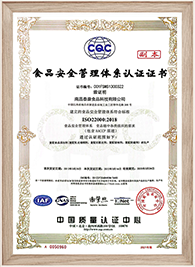
The company has implemented and maintains the HACCP 22000 Food Safety Management System, ensuring reliable products and services. To date, Tellcan has resolved technical challenges for thousands of domestic enterprises and earned prestigious recognitions, including:
 Council Member of China Food Additives Production and Application Industry Association Standing Council Member of Jiangxi Food Additives Association Member of China Dairy Products Industry Association Member of China Bakery & Confectionery Supplementary Materials Industry Association Member of China National Federation of Industry & Commerce Bakery Association Premium Products & Global Sourcing